

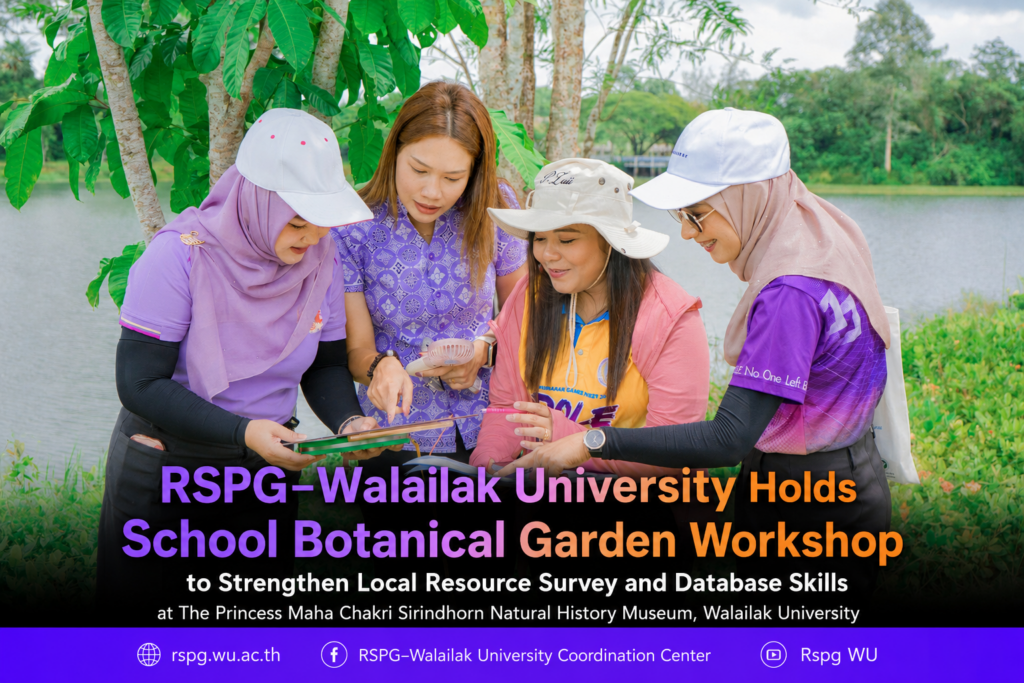
The Plant Genetic Conservation Project under the Royal Initiative of Her Royal Highness Princess Maha Chakri Sirindhorn – Walailak University Coordination Center (RSPG–WU) organized a hands-on workshop on the School Botanical Garden Program from 16–17 October 2025. The two-day program was designed to enhance the capacity of teachers and education personnel to systematically conduct School Botanical Garden activities, survey local resources, and prepare resource databases in accordance with RSPG guidelines.
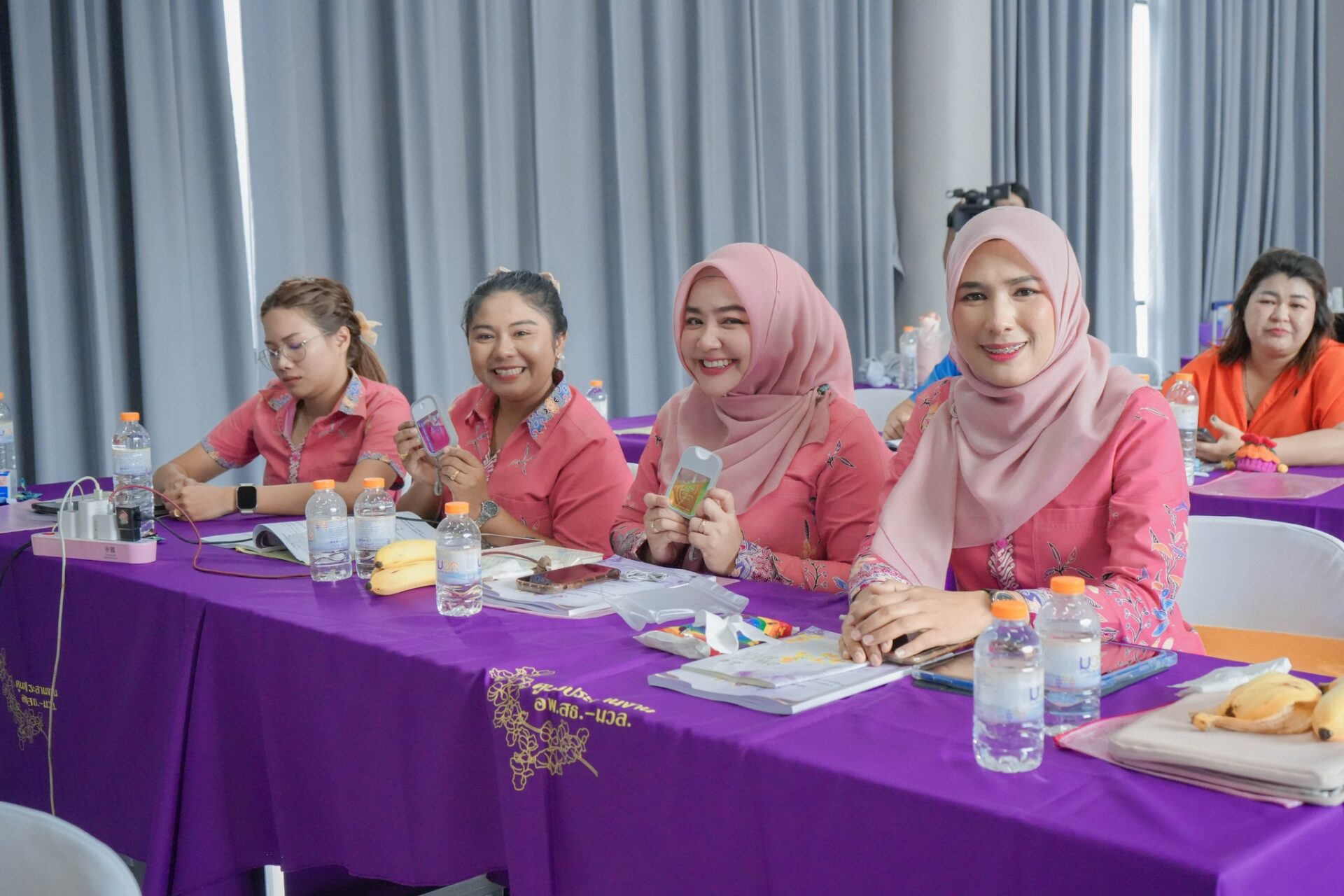
The workshop was attended by 30 participants from two educational organizations: the Nuea Khlong District Learning Promotion Center, Krabi Province, and the Mueang Nakhon Si Thammarat District Learning Promotion Center.
Associate Professor Dr. Chatchai Kalyanapanon, Acting Director of Walailak Botanic Park and Deputy Director of the RSPG–WU Coordination Center, welcomed the participants and highlighted the importance of strengthening personnel capacity to support conservation-based learning and the systematic documentation of local resources.
The workshop featured Dr. Pipat Sroysuk, Head of Curatorial Affairs and the Southern RSPG Regional Coordination Center, as the principal instructor. He was joined by assistant trainers from the RSPG–WU Coordination Center, who provided close guidance throughout both the lecture and practical sessions.
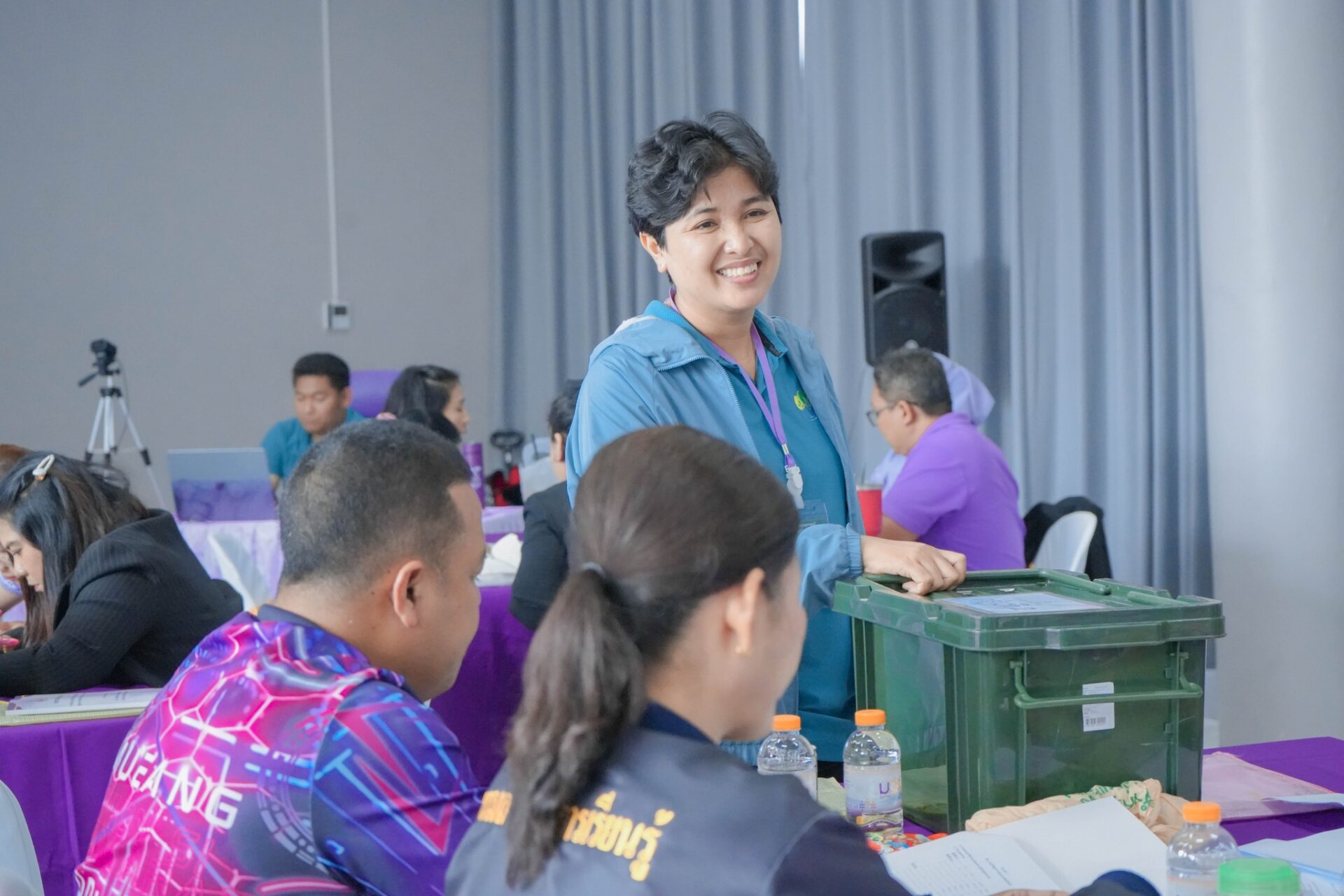
On 16 October 2025, the morning session began with a lecture by Dr. Pipat Sroysuk on “Guidelines for Implementing the School Botanical Garden Program under the Plant Genetic Conservation Project under the Royal Initiative of Her Royal Highness Princess Maha Chakri Sirindhorn (RSPG).” The session introduced participants to the principles, framework, and systematic approach required for effective implementation of the School Botanical Garden Program.
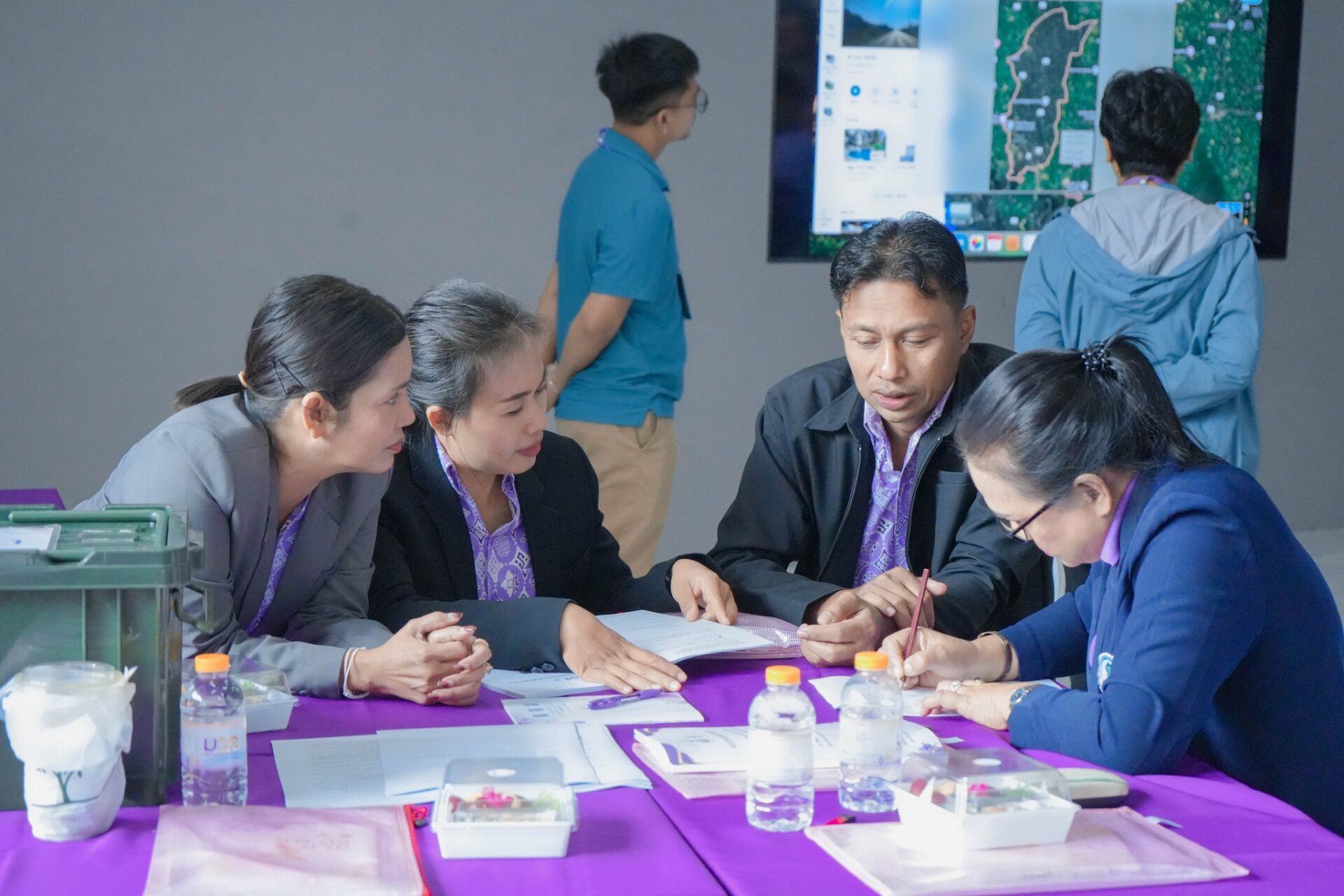
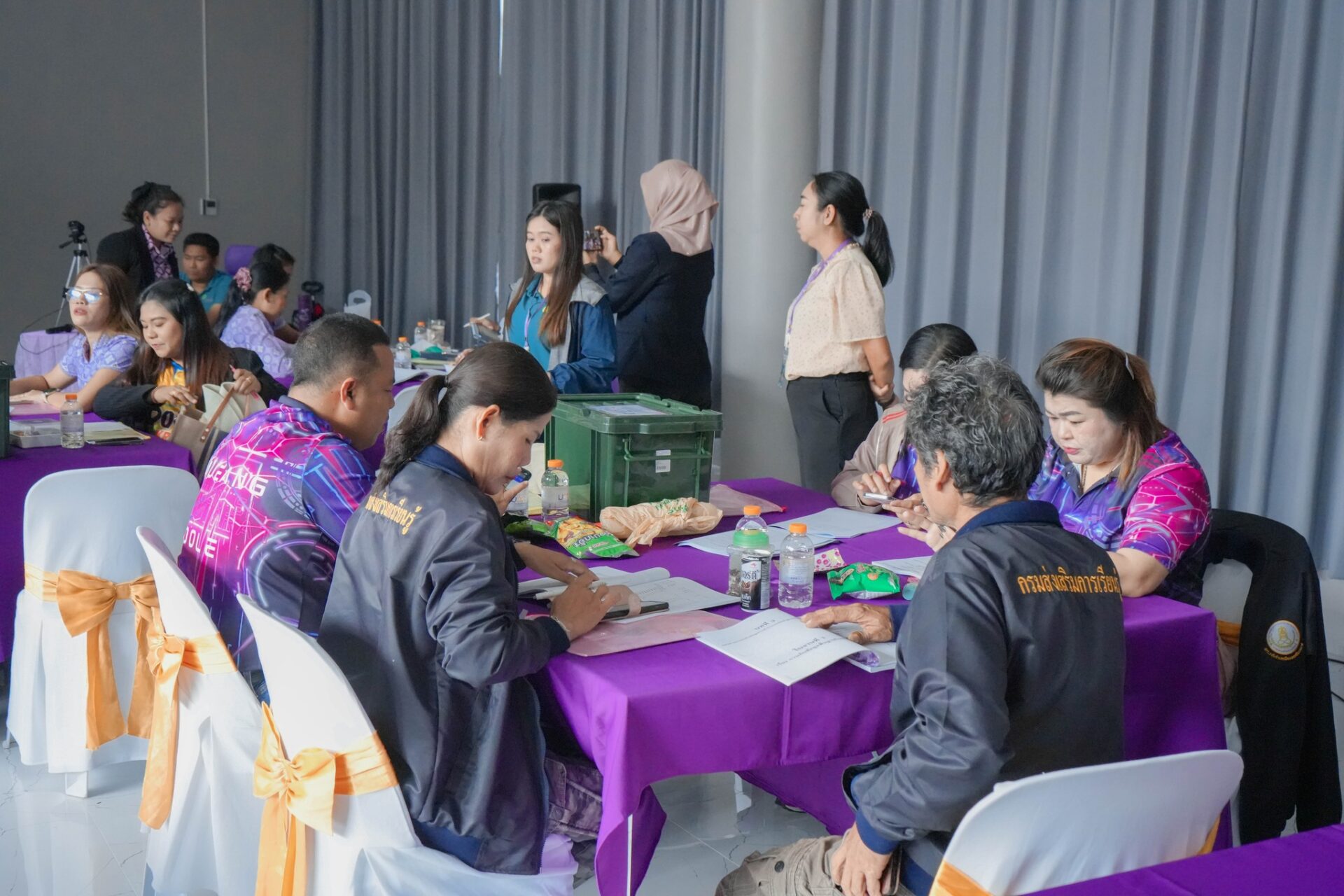
The afternoon focused on practical training in local resource surveys and database preparation, using nine worksheets as the core learning tools. Acting Sub Lt. Akkarayut Rungsimantuchart led the exercises for Worksheets 1–4, Mrs. Ruamporn Kongchan instructed Worksheet 5, Mr. Awut Kaenphet guided Worksheets 6–7, and Ms. Nantakarn Boonchuay led Worksheets 8–9. All served as assistant trainers from the RSPG–WU Coordination Center.
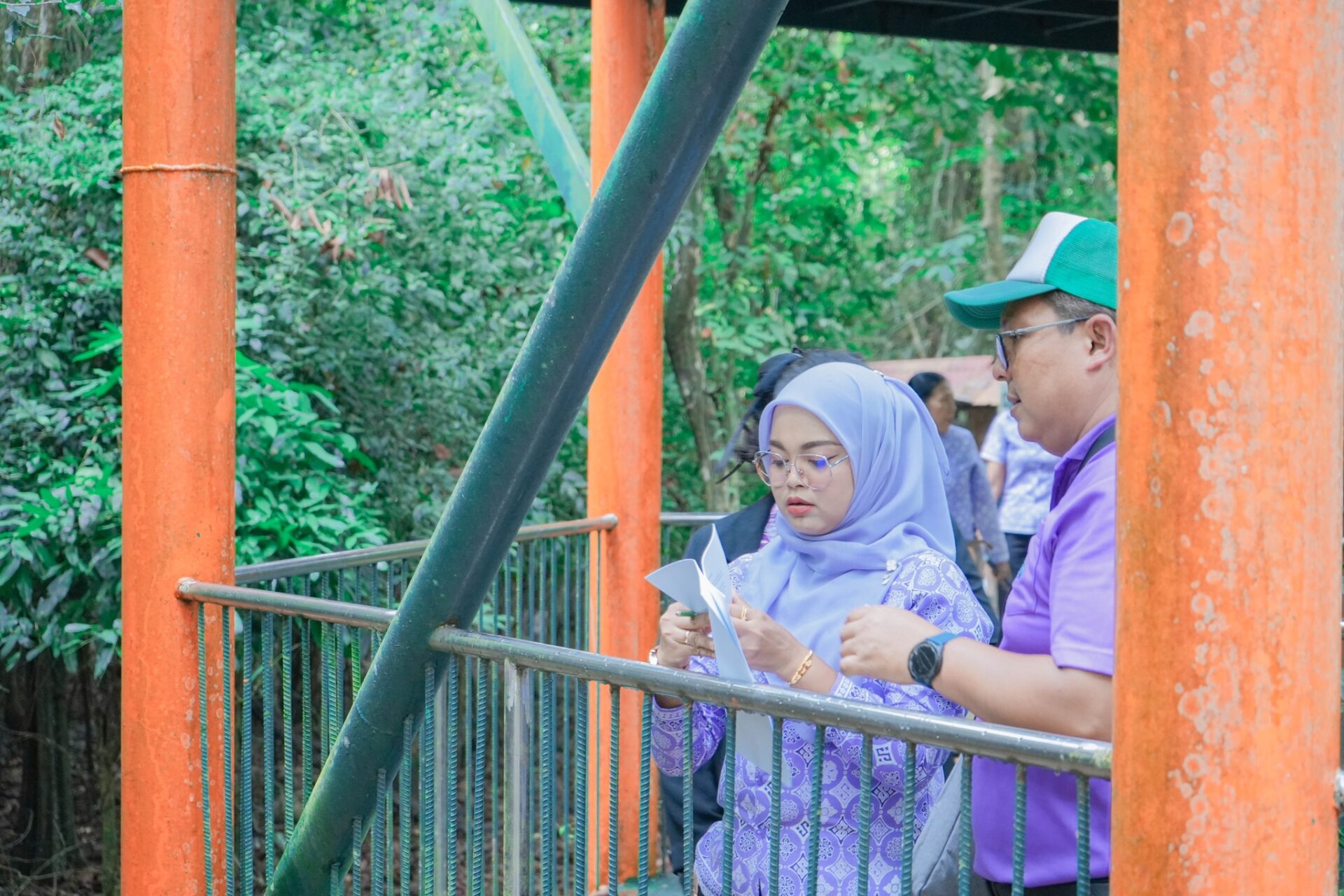
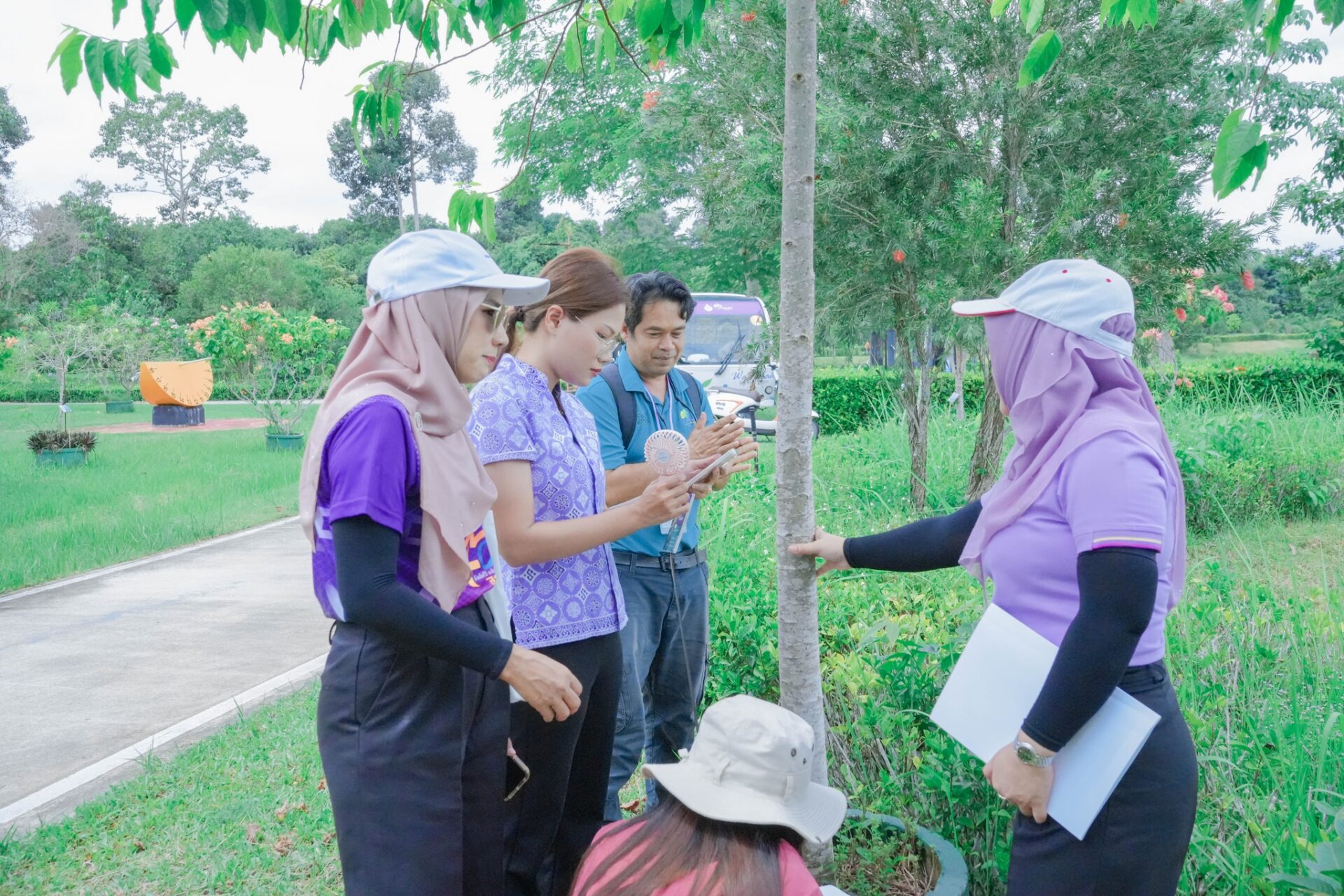
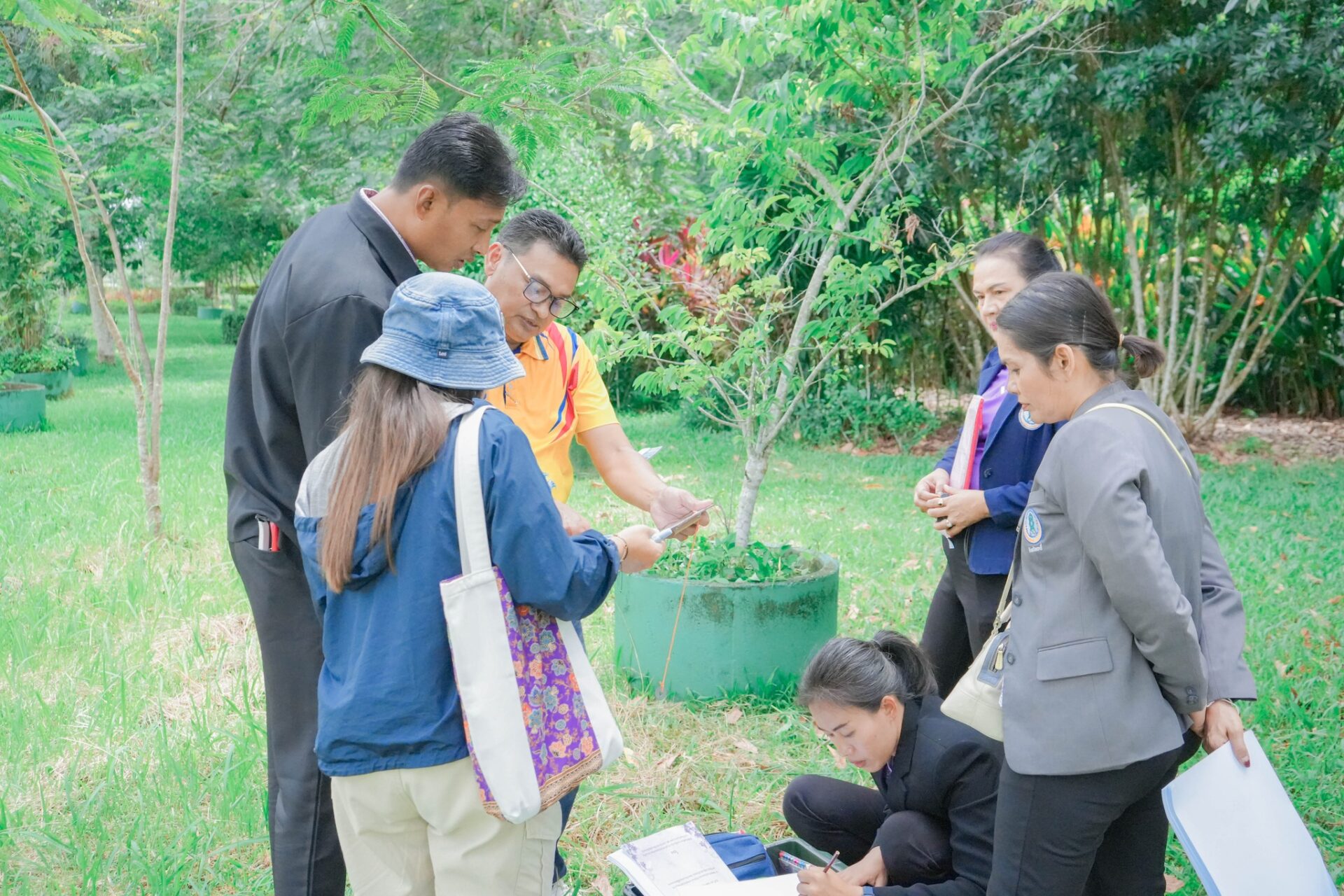
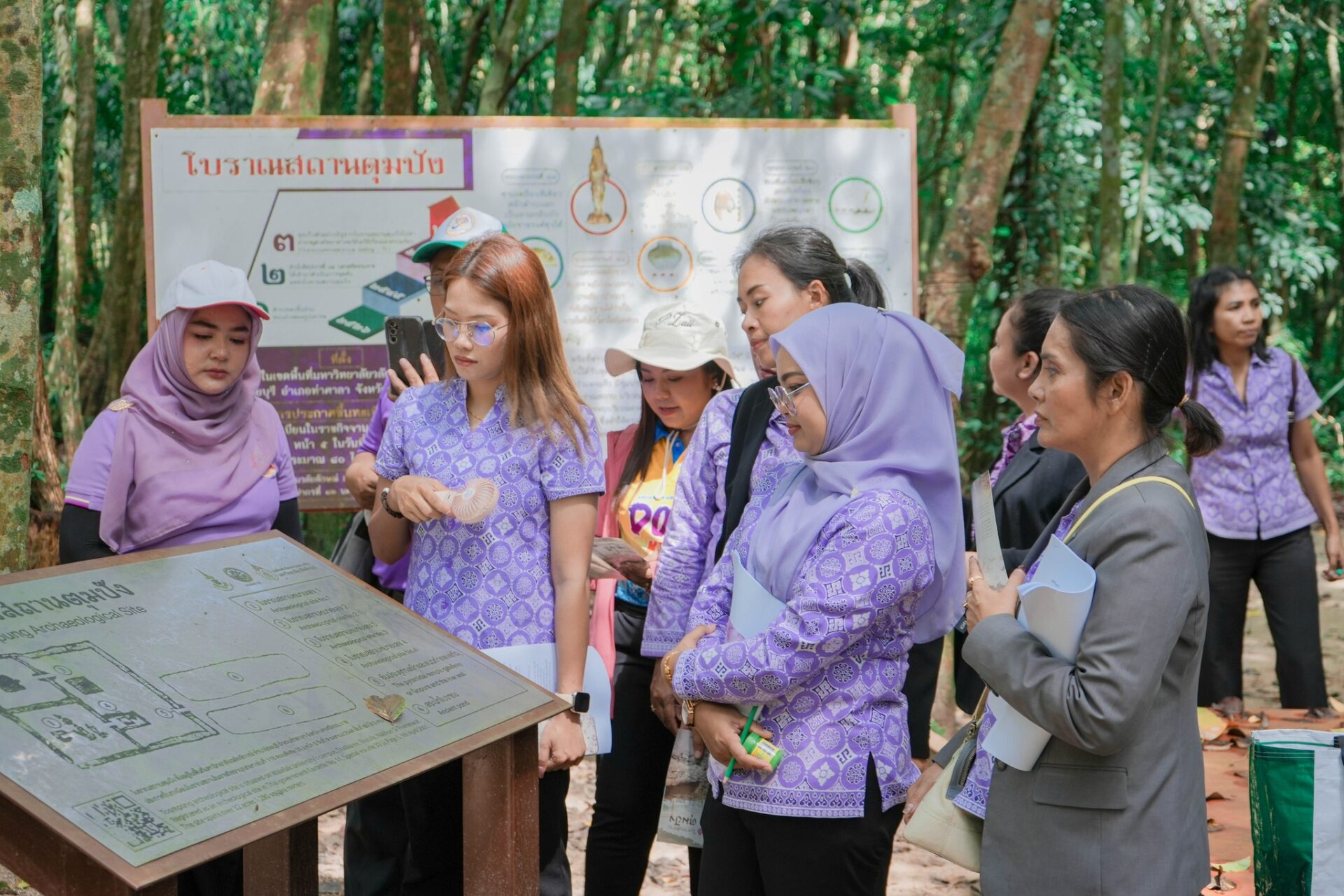
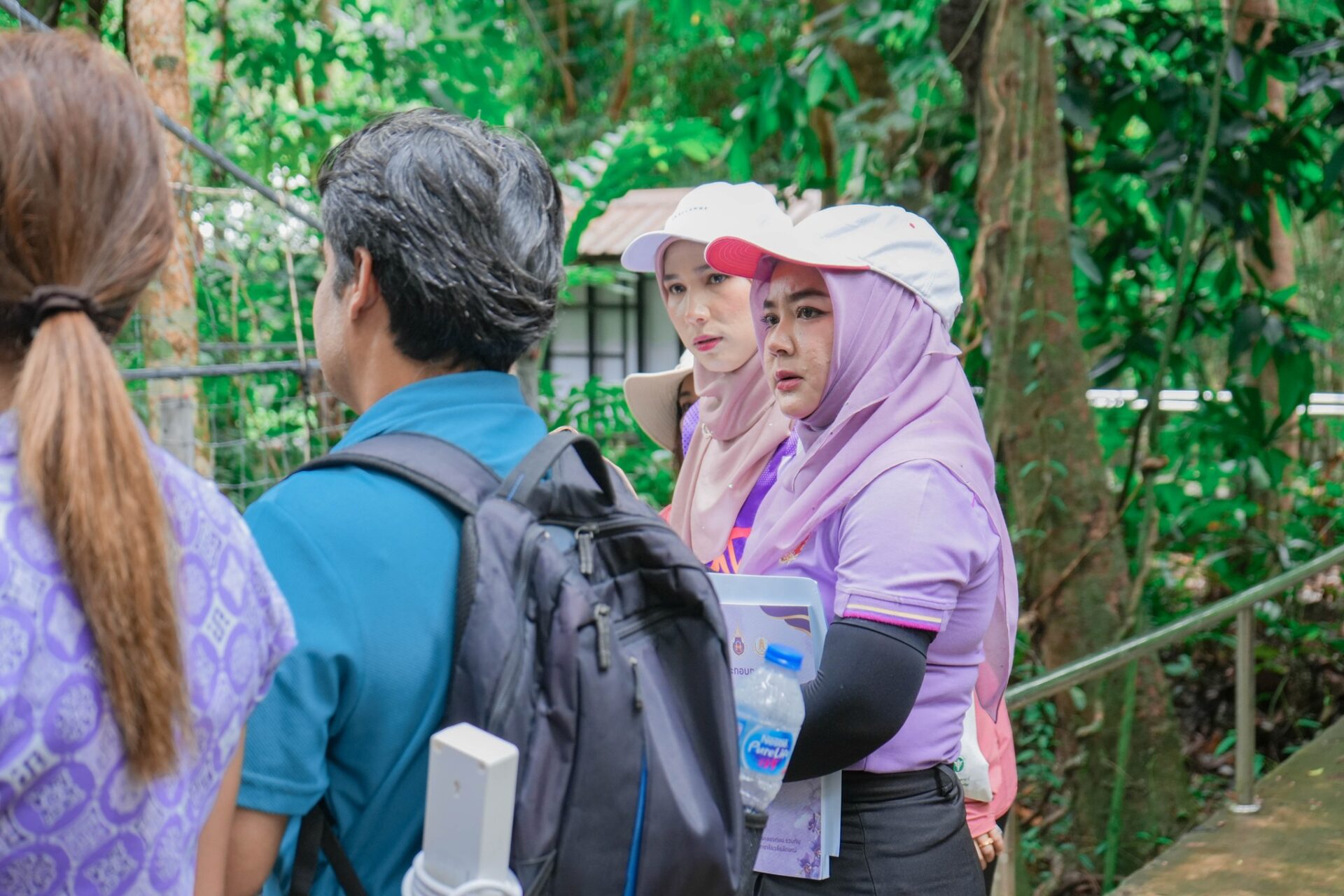
On 17 October 2025, participants moved from classroom instruction to field-based learning. During the morning session, they conducted actual field surveys and collected information required for Worksheets 1–7, allowing them to apply the concepts and techniques introduced on the first day.
Fieldwork continued in the afternoon with data collection for Worksheets 8–9, supported by trainers from the Student Promotion and Development Center in collaboration with the assistant trainer team from the RSPG–WU Coordination Center.
The workshop emphasized learning by doing, enabling participants to gain direct experience in observing, surveying, recording, classifying, and organizing information on local resources. This process is considered an important foundation for developing reliable resource databases and using local biodiversity as an educational resource within schools and communities.
Beyond technical skills, the training also aimed to strengthen participants’ understanding of how the School Botanical Garden Program can be integrated into learning activities and community-based resource conservation. Systematically collected information can support future education, conservation planning, knowledge transfer, and the sustainable use of local resources.
The RSPG–WU Coordination Center expects participants to apply the knowledge and practical skills gained from the workshop within their respective institutions, helping to strengthen School Botanical Garden operations and develop accurate local resource databases in line with RSPG standards.
Ultimately, the initiative seeks to transform schools and communities into living learning spaces, where local plants, animals, biological resources, knowledge, and cultural wisdom can be studied, documented, conserved, and passed on to future generations in a systematic and sustainable manner.
Facebook Comments Box